
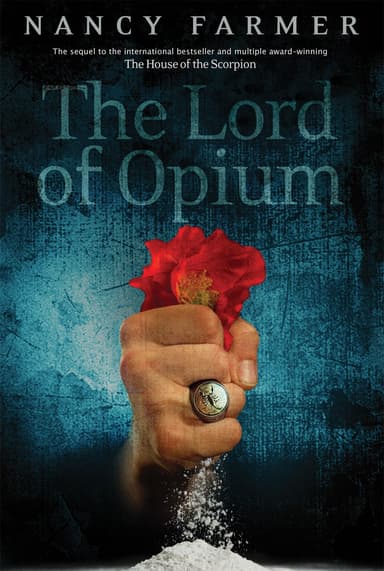
Читаем The Lord of Opium полностью
“That doesn’t work. Dr. Kim tried it.”
“So did we. So did I over the years,” said Dr. Rivas. “I sacrificed hundreds of eejits trying to find a cure for my son. I tried nullifying the magnetism with electrical currents. I engineered a white blood cell to attack microchips. I induced high fevers, hoping they would destroy the chips before they killed the brain. Nothing worked.”
“So this is hopeless,” Matt said.
“You can do a procedure a thousand times and sometimes the thousandth time is different. You make a lucky mistake. That’s the only hope I can give you.”
Matt looked down at Mirasol, her beautiful face composed, for the moment, in sleep. How could he order this mutilation without any hope of success? They said eejits didn’t feel pain, but he knew, deep down where no one could detect it, they did. “Leave her as she is,” he said.
“Shall I give her a lethal injection?” The doctor removed his gloves.
“No. Give me the infusers. When she starts suffering, I’ll give her one.”
“She might linger for an hour or two. No more.”
Dr. Rivas left, and Matt sat by Mirasol’s bed. She awoke, and for a moment her eyes were clear and she seemed to see him. Then the anguish overtook her and she screamed. The last time she looked directly at Matt and he bent over and kissed her. “I love you, Waitress,” he said.
She gazed back, really seeing him. “I am called Mirasol,” she whispered, and then, as the infusion flooded her veins, she sighed and did not wake again.
37
THE FUNERAL
Matt did not know how much time had passed. He sat unmoving as the small sounds of a hospital went on around him. Air-conditioning clicked on and off. A blood pressure cuff inflated and deflated on Mirasol’s wrist. A heart monitor searched for a beat, found none, and searched again. Matt was no stranger to death. It had surrounded him all his life. He had seen El Viejo, El Patrón’s grandson, lying in his coffin. He had seen the eejit in the field as a small child. And what he did not see, he was well aware of.
Except for Tam Lin, it had been remote from him. Matt didn’t really know most of those people. But Mirasol, dulled and silent though she was, had been a living presence. Her eyes followed him as the sunflower, her namesake, turned its face to the sun. Now something had departed, and he did not know what it was.
Dr. Rivas came into the room. He was no longer dressed for surgery, but had reverted to a white lab coat. “I’m sorry,
“The
“We have procedures to deal with this situation. Cienfuegos does it all the time. It isn’t healthy for you to grieve for someone who wasn’t really there.”
“Just as you never grieved for your eejit son,” Matt said.
Dr. Rivas winced. “I deserved that. But you see, I knew my son
“And I have memories of Mirasol.” Matt turned back to the motionless figure on the bed.
The doctor fussed with the equipment, detaching the blood pressure cuff and switching off the heart monitor. “I don’t know whether you have any religious preferences,” he said. “El Patrón was a Catholic, or at least he liked the ceremonies. I could have
Matt thought of Listen’s quotes from the doctor:
The nun was as respectful as anyone could wish. She said a rosary over Mirasol and prayed silently. “I don’t think I can give her absolution,” she said hesitantly.
“What’s absolution?” said Matt.
“When someone is dying, Catholics give them the last rites. The person confesses his sins and is forgiven so that he can enter heaven. Mirasol couldn’t have confessed to anything. What sins could she have committed in her state?”
“What happens with dying infants and people in comas?”
“You’re right,
“Not yet,” he said. “I say she’s still alive.”
“But the doctor—”
“Are you going to believe someone whose lifework is turning people into eejits? I am the Lord of Opium, and I say she’s alive.”
“Oh, dear! Oh, dear! I don’t even know whether Mirasol has been baptized,” the nun said nervously.
“Then do it now.”
Все книги серии Matteo Alacran
Похожие книги



- Мистика
- Историческое фэнтези
- Ироническая фантастика
- Альтернативная история
- Технофэнтези
- Постапокалипсис
- Киберпанк
- Детективная фантастика
- Стимпанк
- Героическая фантастика
- Научная Фантастика
- Эпическая фантастика
- Ненаучная фантастика
- Сказочная фантастика
- Космоопера
- Юмористическое фэнтези
- Ироническое фэнтези
- Ужасы и мистика
- Юмористическая фантастика
- Социально-философская фантастика
- Космическая фантастика
- Городское фэнтези
- Боевая фантастика
- ЛитРПГ
- Фантастика
- Современная сказка
- Социально-психологическая фантастика
- Хроноопера
- Ужасы
- Мифологическое фэнтези
- Фэнтези
- Фантастика: прочее
- РеалРПГ
- Славянское фэнтези
- Бояръ-Аниме
- Попаданцы
- Шпионский детектив
- Прочие Детективы
- Маньяки
- Полицейские детективы
- Исторический детектив
- Шпионские детективы
- Классические детективы
- Триллеры
- Криминальные детективы
- Иронические детективы
- Криминальный детектив
- Крутой детектив
- Детективы
- Триллер
- Иронический детектив, дамский детективный роман
- Советский детектив
- Классический детектив
- Политический детектив
- Боевик
- Про маньяков
- Медицинский триллер
- Дамский детективный роман
- Техно триллер
- Юридический триллер
- Боевики
- Исторические детективы
- Политические детективы
- Поэзия
- в стихах
- Эпическая поэзия
- Басни
- Песенная поэзия
- Лирика
- Визуальная и экспериментальная поэзия, верлибры, палиндромы
- Поэма, эпическая поэзия
- Классическая зарубежная поэзия
- Классическая русская поэзия
- Поэзия Востока
- Современная поэзия
- Классическая поэзия
- Современная зарубежная поэзия
- Современная русская поэзия
- Юмористические стихи, басни
- Верлибры
- Палиндромы
- Экспериментальная поэзия
- Визуальная поэзия
- Историческая фантастика
- Историческая литература
- Политика
- Геология и география
- Ветеринария
- Экология
- Государство и право
- Астрономия и Космос
- Математика
- Шпаргалки
- Биохимия
- Обществознание
- Педагогика
- Психология
- Учебники
- Иностранные языки
- Детская психология
- Биофизика
- Прочая научная литература
- Языкознание
- Биология
- Психотерапия и консультирование
- Юриспруденция
- Военная история
- Альтернативная медицина
- Философия
- Медицина
- Зоология
- Физика
- Литературоведение
- Зарубежная образовательная литература, зарубежная прикладная, научно-популярная литература
- Языкознание, иностранные языки
- Биология, биофизика, биохимия
- Обществознание, социология
- Психология и психотерапия
- Востоковедение
- Химия
- История
- Ботаника
- Экономика
- Альтернативные науки и научные теории
- Научная литература
- Рефераты
- Секс и семейная психология
- Книги о войне
- Популярно об истории
- Книги о путешествиях
- Книги по психологии
- Религия и духовная литература
- Детская познавательная и развивающая литература
- Детская образовательная литература
- Книги для дошкольников
- Прочая детская литература
- Детские приключения
- Детская проза
- Детские стихи
- Детские остросюжетные
- Детская фантастика
- Книга-игра
- Буквари
- Фантастика для детей
- Детская литература
- Проза для детей
- Внеклассное чтение
- Игры, упражнения для детей
- Классическая детская литература
- Стихи для детей
- Русские сказки
- Зарубежная литература для детей
- Сказки народов мира
- Зарубежные детские книги
- Сказки
- Детские детективы
- Школьные учебники
- Учебная литература
- Книги для подростков
- Экономика
- Поиск работы, карьера
- Отраслевые издания
- Недвижимость
- Корпоративная культура
- Делопроизводство
- Внешнеэкономическая деятельность
- Бухучет и аудит
- Торговля
- Малый бизнес
- Личные финансы
- Государственное и муниципальное управление
- Краткое содержание
- Ораторское искусство / риторика
- Работа с клиентами
- Стартапы и создание бизнеса
- Маркетинг, PR, реклама
- Карьера, кадры
- Маркетинг, PR
- Финансы
- Личная эффективность
- О бизнесе популярно
- Интернет-бизнес
- Банковское дело
- Менеджмент
- Менеджмент и кадры
- Тайм-менеджмент
- Ценные бумаги, инвестиции
- Кадровый менеджмент
- Политическое управление
- Управление, подбор персонала
- Зарубежная деловая литература
- Деловая литература
- Педагогика, воспитание детей, литература для родителей
- Медицина и здоровье
- Семейные отношения, секс
- Семейные отношения
- Рыбалка
- Отдых / туризм
- Автомобили и ПДД
- Сделай сам
- Прочее домоводство
- Спорт
- Здоровье и красота
- Охота
- Домашние животные
- Коллекционирование
- Хобби и ремесла
- Кулинария
- Развлечения
- Сад и огород
- Боевые искусства, спорт
- Домоводство
- Здоровье
- Эротика и секс
- Домашнее хозяйство
- Интерьеры
- Хобби / увлечения
- Мода и стиль
- Красота
- Секс / секс-руководства
- Йога
- Изобразительное искусство
- Рукоделие и ремесла
- Спорт / фитнес
- Прикладная литература
- Компьютерное «железо»
- Базы данных
- ОС и Сети
- Интернет
- Программное обеспечение
- Программирование
- Прочая компьютерная литература
- Учебные пособия, самоучители
- ОС и Сети, интернет
- Программирование, программы, базы данных
- Компьютерное 'железо' (аппаратное обеспечение), цифровая обработка сигналов
- Зарубежная компьютерная, околокомпьютерная литература
- Цифровая обработка сигналов
- Средневековая классическая проза
- Современная проза
- Классическая проза
- Готический роман
- Антисоветская литература
- Военная проза
- Проза прочее
- Роман
- Повесть
- Новелла
- Сентиментальная проза
- Рассказ
- Историческая проза
- Контркультура
- Эпистолярная проза
- Русская классическая проза
- Советская классическая проза
- Магический реализм
- Проза
- Зарубежная классическая проза
- Классическая проза ХX века
- Классическая проза ХIX века
- Роман, повесть
- Фантасмагория, абсурдистская проза
- Афоризмы, цитаты
- Экспериментальная, неформатная проза
- Проза о войне
- Современная русская и зарубежная проза
- Классическая проза XVII-XVIII веков
- Афоризмы
- Эпопея
- Феерия
- Семейный роман/Семейная сага
- Эссе, очерк, этюд, набросок
- Малые литературные формы прозы: рассказы, эссе, новеллы, феерия
- Зарубежные приключения
- Современная зарубежная литература
- Зарубежная драматургия
- Зарубежная фантастика
- Зарубежный юмор
- Зарубежная религиозная литература
- Зарубежная образовательная литература
- Зарубежная публицистика
- Зарубежная психология
- Зарубежные любовные романы
- Зарубежная поэзия
- Зарубежная классика
- Зарубежная старинная литература
- Зарубежная компьютерная литература
- Зарубежная литература о культуре и искусстве
- Зарубежные детективы
- Зарубежная прикладная литература
- Зарубежное фэнтези
- Зарубежная справочная литература